We arrived in Aswan and immediately went to check in to our Nile Cruise. We had a comfortable cabin (see our window circled below) with beautiful views of the river aboard the M/S Semiramis I. Our guide, Mostafa was ready to go but since we hadn’t showered in 52 hours we mutinied and fortunately the ship allowed us early check in. After lunch we took a private boat trip to a Nubian Village. Although interesting to learn a bit about the Nubians (and Mathis got to hold a juvenile crocodile) this is essentially a tourist trap with a huge market full of ‘souvenirs’. I’d recommend skipping if you’re visiting Egypt. Just take the small boat and explore the river instead!
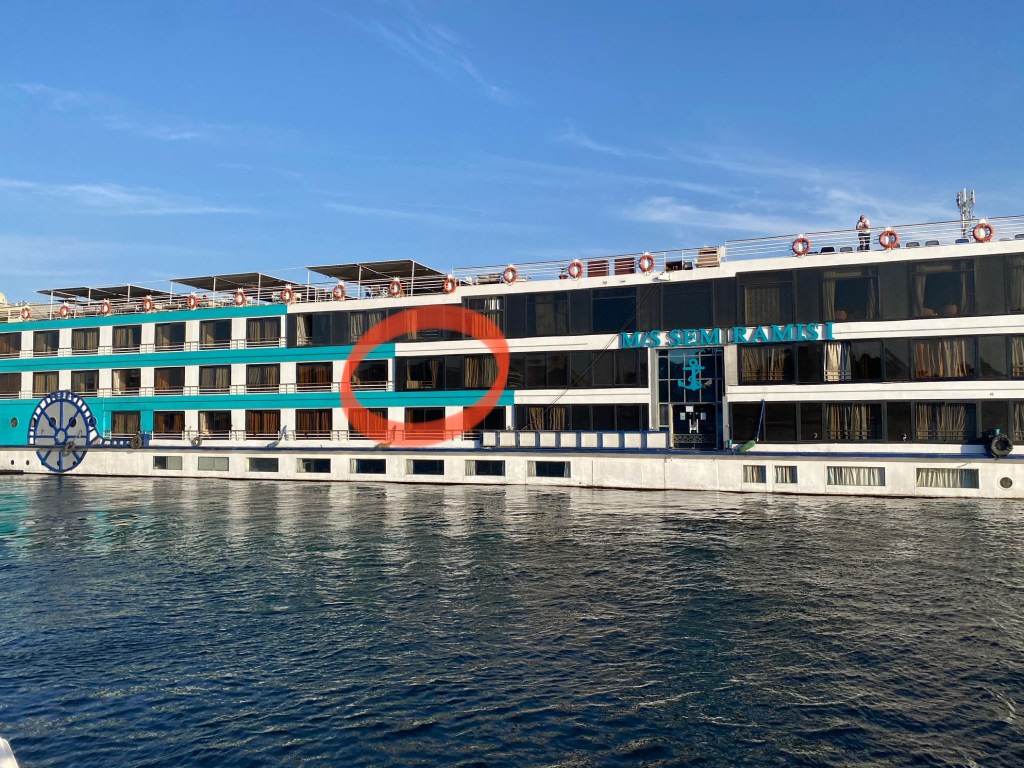
The rest of the afternoon/evening was spent relaxing on the cruise ship. The numbers of these types of boats on the Nile is astonishing! Sometimes we’d be docked 4 or 5 boats deep. The boats just shore up to each other and the guests on the outer boats just walk through all the others to get to shore. We actually only cruised for an afternoon and overnight one night despite staying on the boat for 3 nights. The rest of the time the boat was docked and our jumping off point for tours in Aswan and Luxor.
So on day 2 we woke up still in Aswan, had breakfast on the boat and then headed out with Mostafa to see the Unfinished Obelisk and Philae Temple. The Unfinished Obelisk is notable in that it is the largest known ancient obelisk. It was ordered by Queen Hatshepsut somewhere around 1500 BC but not completed as cracks developed during its construction (obelisks must be one complete piece of solid granite). The site gives valuable clues as to the workers’ techniques when constructing and moving these colossal stones. It would have been almost 42m (137ft) high if completed and erected.

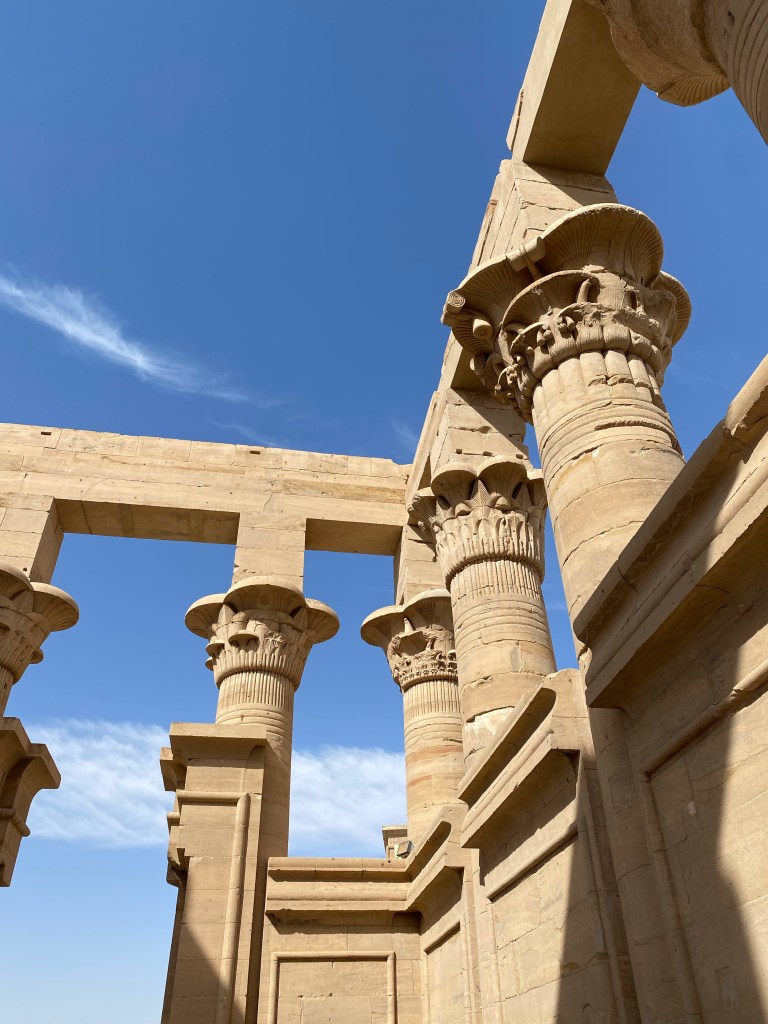
Another UNESCO world heritage site, the temple of ISIS formerly from Philae but relocated to Agilkia island before the Aswan High Dam was completed (it had been intermittently flooded since the completion of the low dam in 1902) was our second stop. It’s amazing to stand in this complex and understand that the entire thing was moved stone by stone and reconstructed! Another interesting feature is the way in which the Christians who invaded Egypt desecrated these temples by scratching out portions of the hieroglyphs and adding grafiti.

Our boat sailed at 2:30 and our only stop before reaching Luxor would be the temple of Kom Ombo. This was another amazing temple complex but an interesting visit. We reached it after dark along with numerous (likely around 50) other Nile cruise boats. So many people converging on the area at once! The photo of the entrance below says it all.
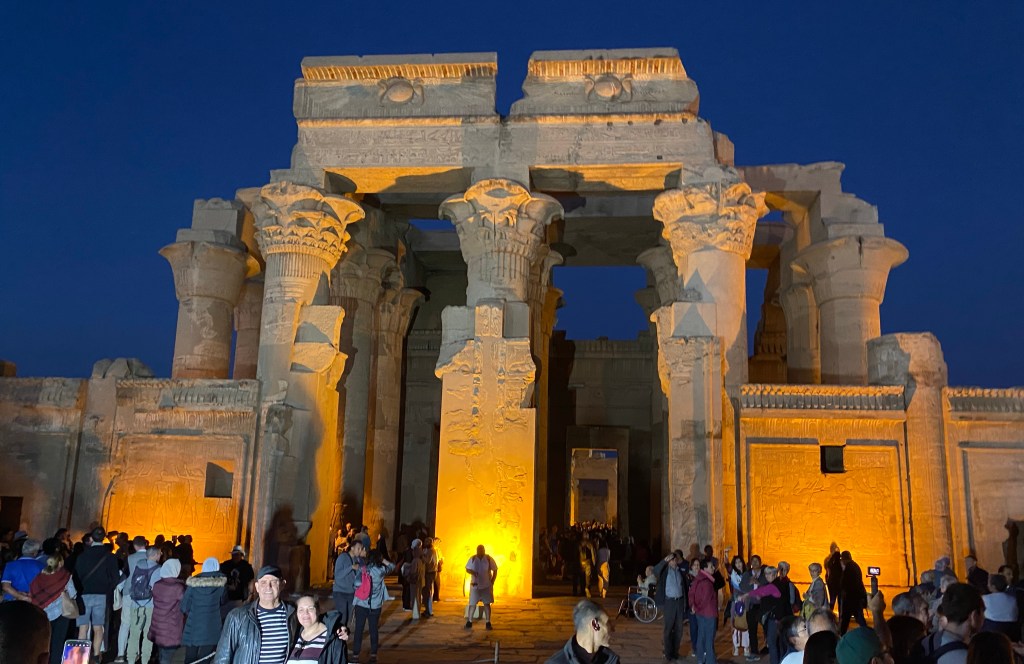
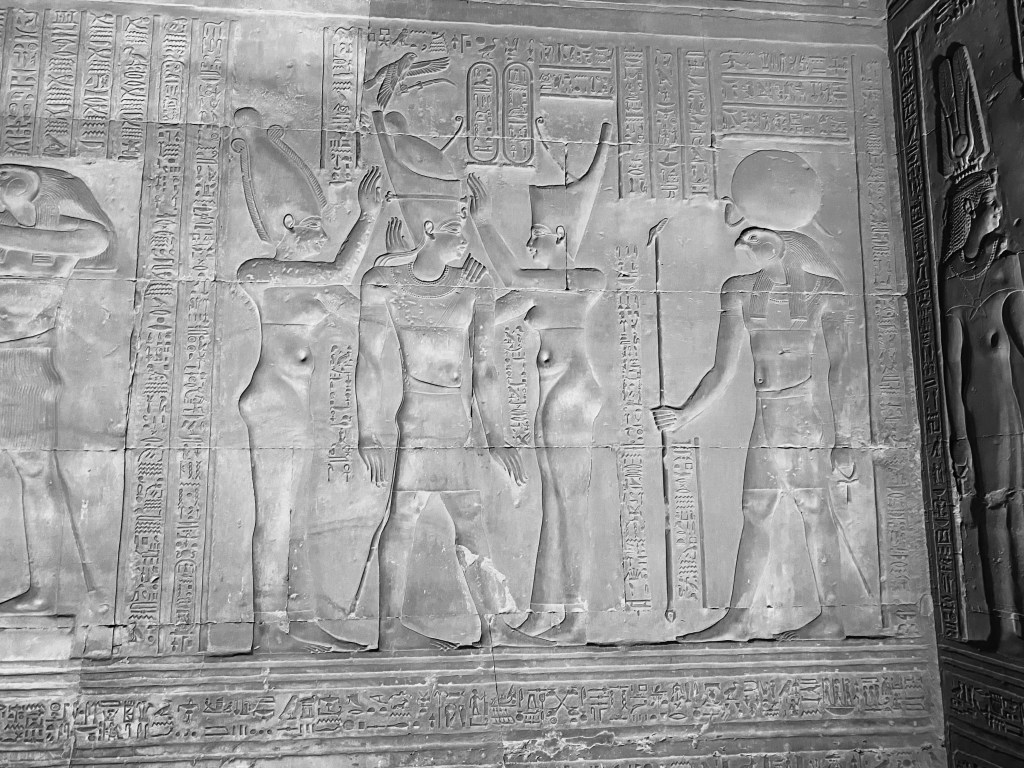
Kom Ombo is a double temple (dedicated to two different deities, Sobek and Horus) constructed during 180-47 BC.

Back to the boat to continue cruising overnight to Luxor. We met Mostafa at 2pm for our visits to Karnak Temple and Luxor Temple.
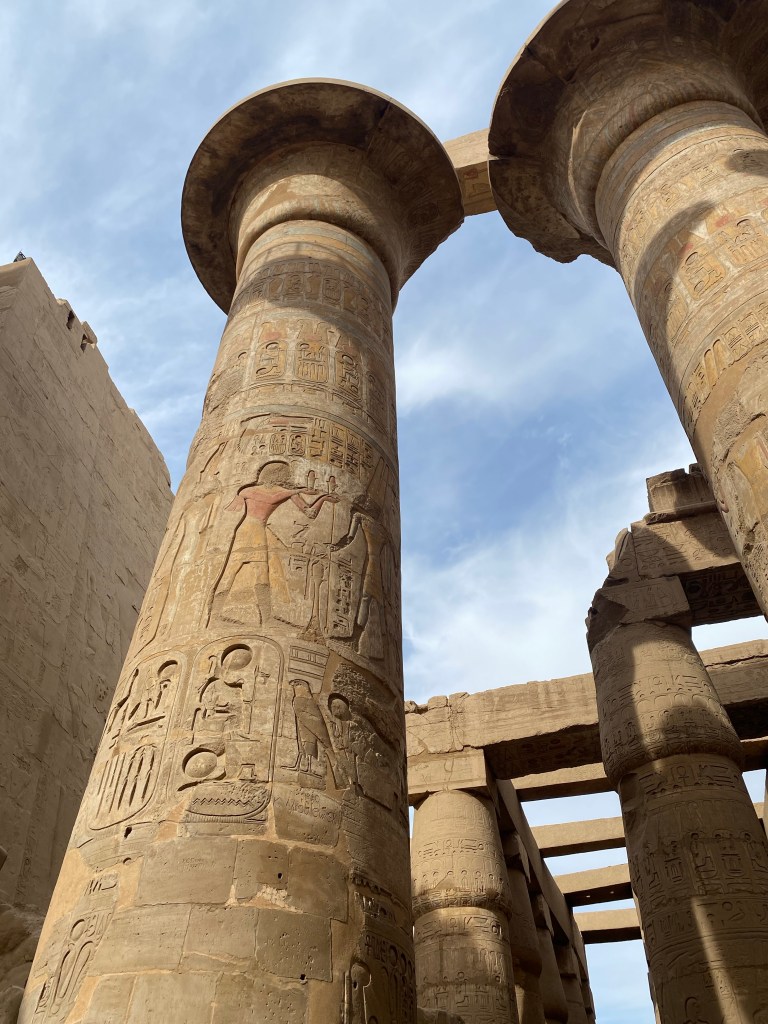
Karnak Temple has a number of beautiful columns (134 arranged in 16 rows in the Great Hypostyle Hall) with the original color still preserved. The temple complex (not all open to the public) is the second most visited historical site in Egypt (you can guess which is the first). It is believed to have been built/worked on by approximately 30 pharaohs!
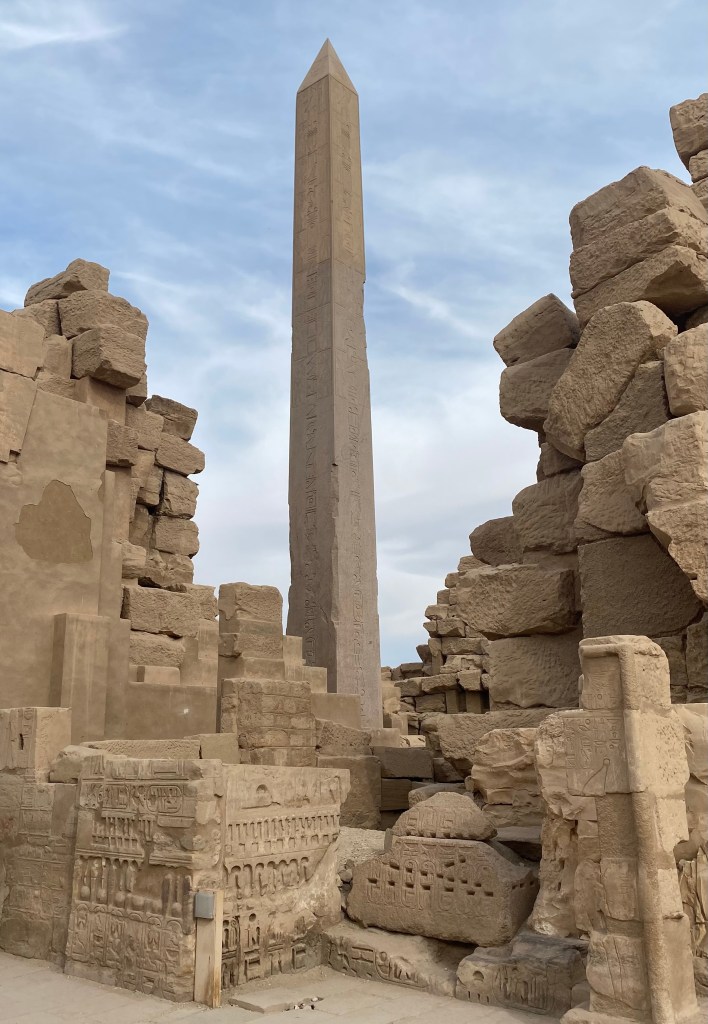
Luxor temple was the first thing we saw as we climbed the concrete steps from the boat.
Dating back to 1392 BCE, the temple was built on the east bank of the Nile River and is dedicated to the deities Mut, Khonsu, and Amun. Its construction was begun by Pharaoh Amenhotep III and was completed by Pharaoh Tutankhamun (the infamous King Tut whose tomb is in the Valley of the Kings and tomb contents are the biggest draw to the Egyptian Museum in Cairo). Containing ten sections, Luxor Temple is massive.
Following Luxor temple it was back to the boat for dinner and to sleep. The next day we would check out of the cruise and see the Valley of the Kings and Queen Hatshepsut’s temple before lunch and then head out on the 4+ hour drive to Hurghada in the afternoon.
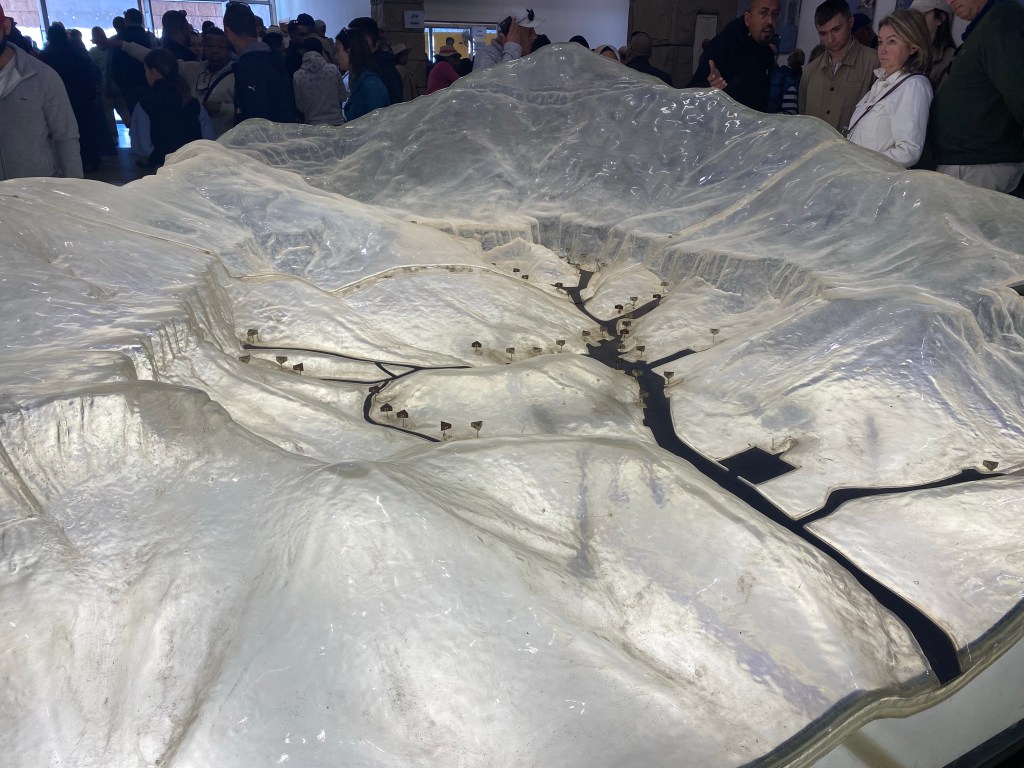
I feel like I have to include the pictures of the topographical maps from the visitor centre to fully illustrate the Valley of the Kings. The first is a photo of the ‘above ground’ portion of the map and the second is the ‘below ground’ illustration. The Valley of the Kings was used by the pharaohs for about 500 years (16th to 11th century BC) for their burial tombs.

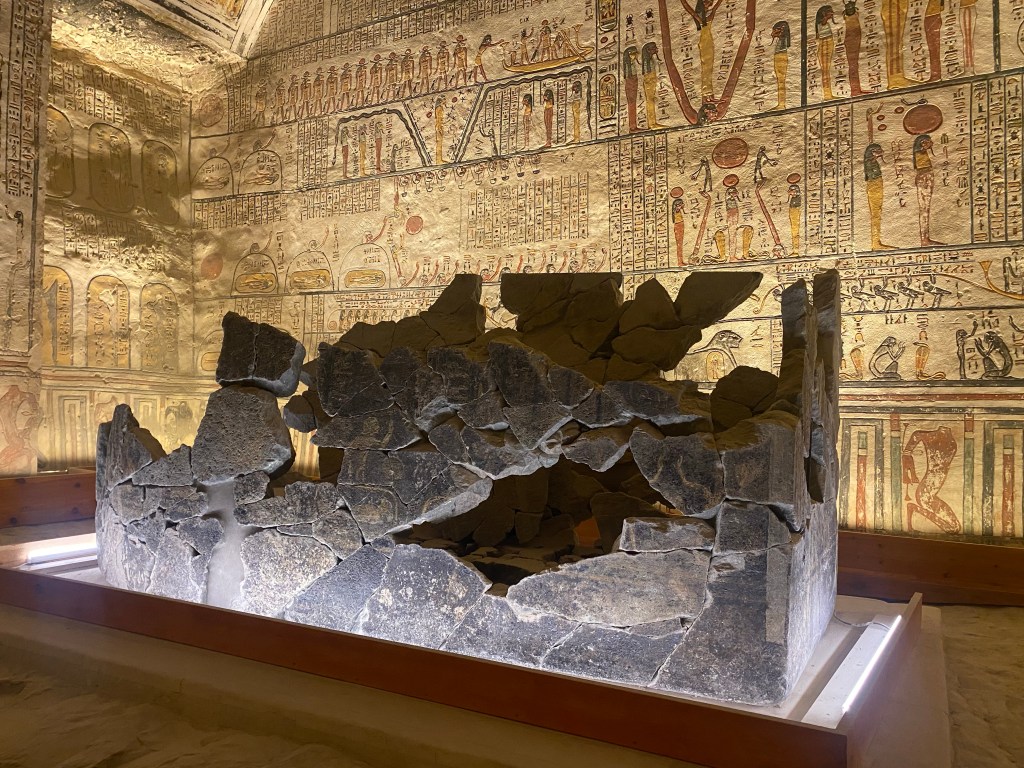
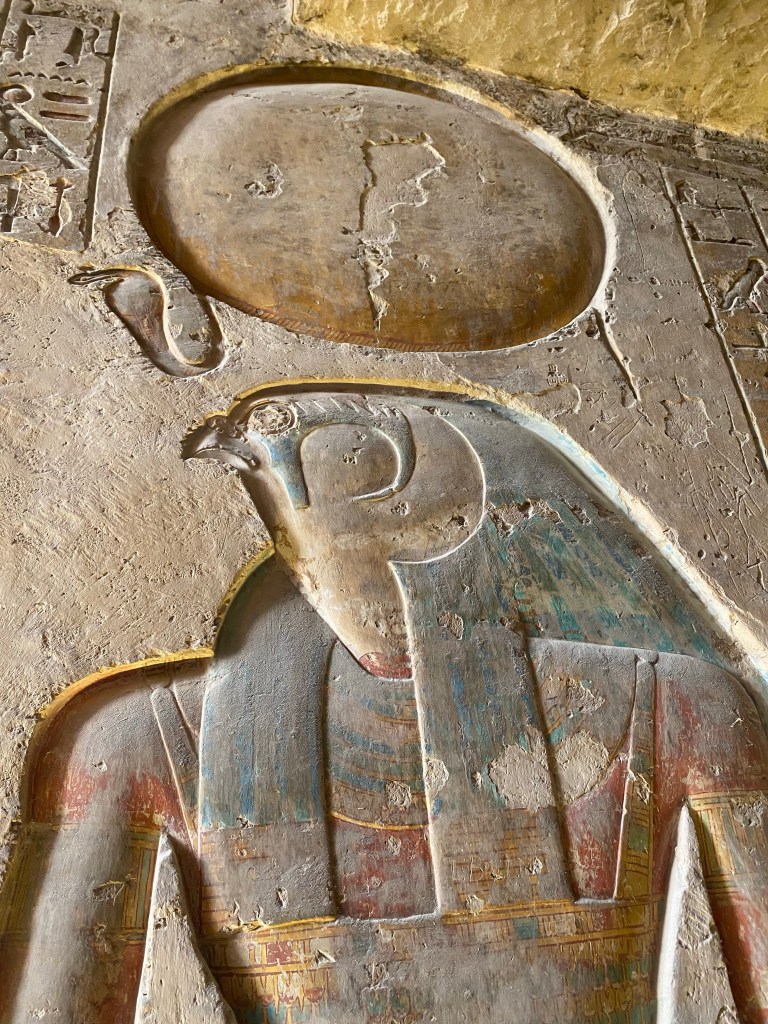
We visited 4 of the tombs in total. Generally they’re quite similar with an opening that leads gradually downward underground through ornately decorated and quite spacious tunnels to the vault at the end. The history here is extensive and I won’t bore you with it. But we saw the tombs of Merenptah, Ramses V and VI (one tomb together), Ramses III and Ramses IX.
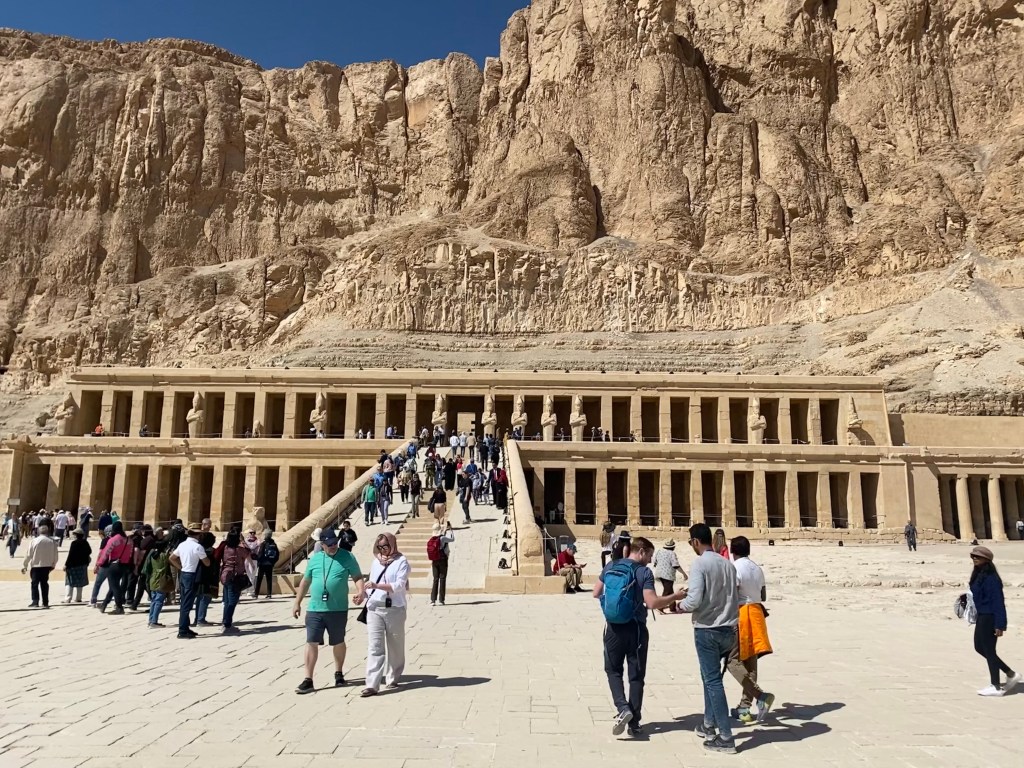
The final historical site we visited in Egypt was Queen Hatshepsut’s temple. A stunning architectural wonder, it’s beautifully restored but poorly preserved due to the extensive destruction of many of its references to her rule by her own stepson Thutmose III during his reign. Regardless , there are still some interesting features and beautiful views of the river valley and the East Bank of Luxor.

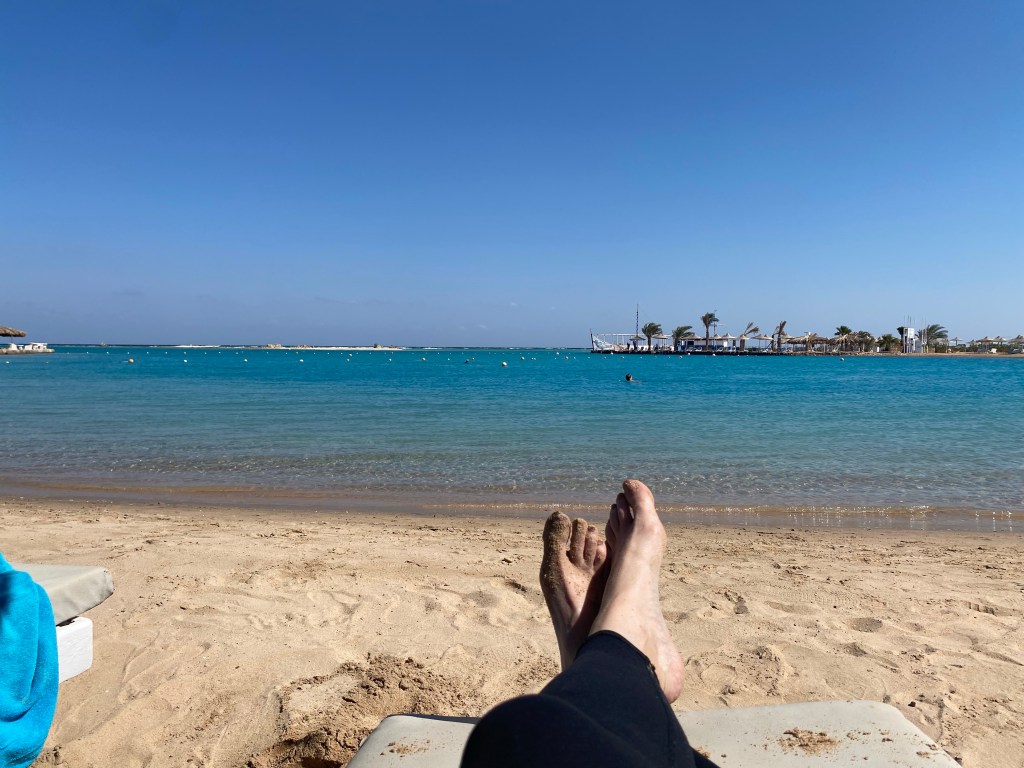
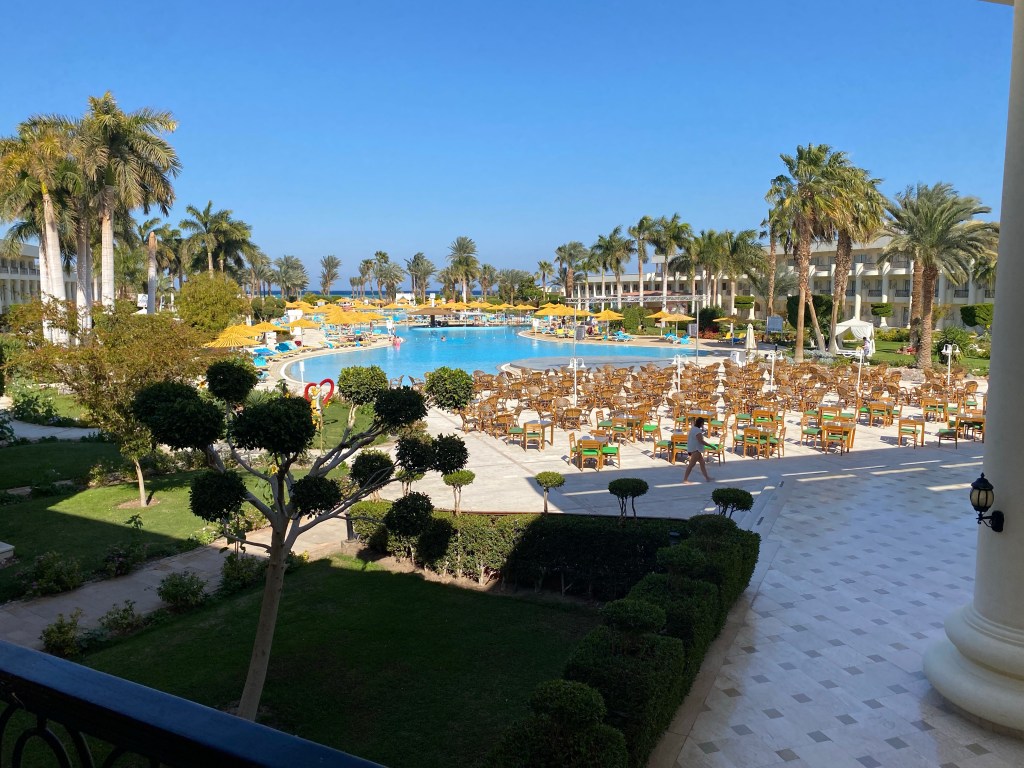
The final leg of our trip took us to Hurghada for 3 days on the beach at an all-inclusive. I have to be honest and those of you who know me will know – I’m too restless and too much of a foodie for the all-inclusive approach to travel. But I powered through, endured the 6 hour drive back to Cairo (not at all sure why we didn’t fly for $80 each but that was what was organized by the tour) and got some sun, fresh air and dipped (too cold to swim) in the Red Sea for the second time in my life. And that’s a wrap on Egypt!!! The highlight was definitely getting to spend time with Malorie and Mathis! Followed closely by getting to see another of the seven wonders of the world!
 My Motion Devotion