I’m sooo late writing this!!

I hit the ground running in Egypt. Fastest time through an airport ever thanks to my eVisa and carry on luggage – I think I was off the plane, through immigration and out the door in less than 10 minutes. Cairo’s airport is quite far from Giza where our hotel was so it was a bit of a trip to meet up with Malorie and Mathis to start our morning at the pyramids. I met Malorie through Leighton – they used to work together and he frequently reminds me that she was his friend first and Mathis is the eldest of her 3 sons. Mathis chose Egypt as his first overseas destination and this trip was supposed to happen in March of 2020.
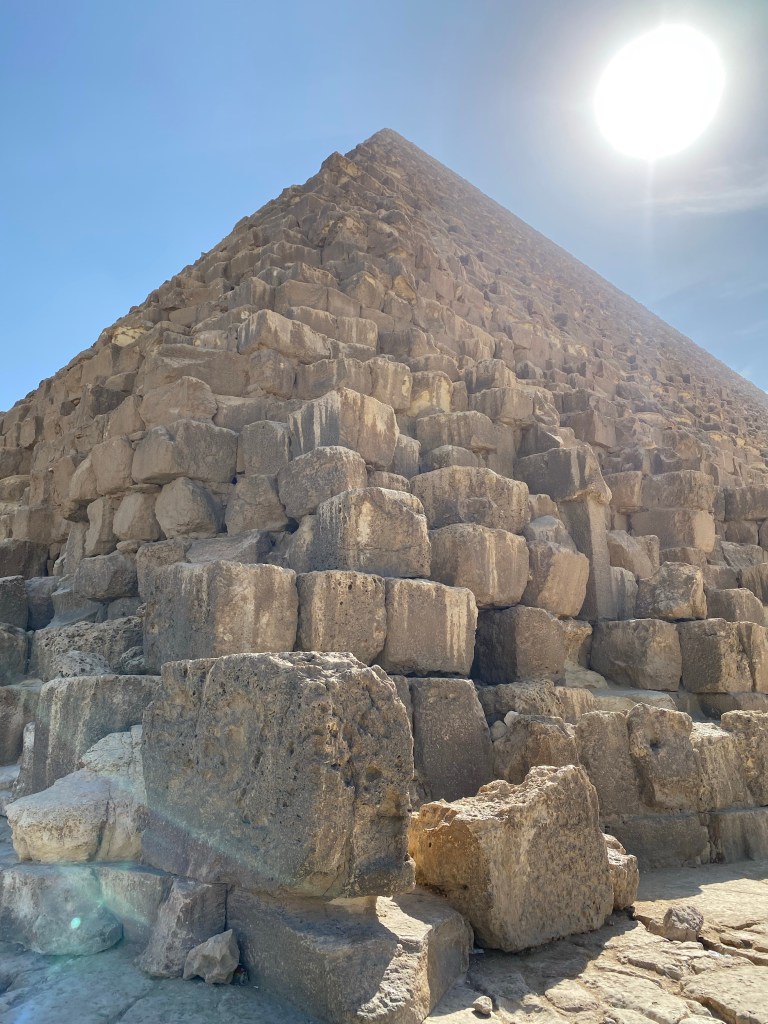
There are actually 9 pyramids at the Giza site. The largest is the Great Pyramid of Khufu (or Cheops) is around 4600 years old and covers 13 acres at its base. The pyramid closest to it, the pyramid of Khafre is smaller but appears larger at certain angles because of its higher elevation. The Great Pyramid was designated as one of the seven wonders of the ancient world and is the only one remaining.

After viewing the pyramids from all angles (except the one that yields the perfect photo of all 9 pyramids but requires a $22 camel ride – and if I never sit on a camel again it will be too soon), we proceeded downhill slightly to where the Sphinx stands guard. This iconic monument with the head of a man (presumably the pharaoh Khafre) and the body of a lion is thought to have been built in approximately 2558–2532 BC. There are numerous interesting theories about the destruction of its nose and extensive restoration and excavation has taken place multiple times throughout history.
I feel like I should qualify my statement about camels. They’re lovely animals from far. Up close, they smell awful and are generally grumbly unfriendly creatures. And riding them is uncomfortable. But all those things aside, they make me sad. Generally they don’t appear to be well cared for and the ones we saw at the pyramids were scarred and even had open wounds. And I just can’t see that standing around waiting for someone to agree to go for a ride all day, every day is any way for a creature to live.
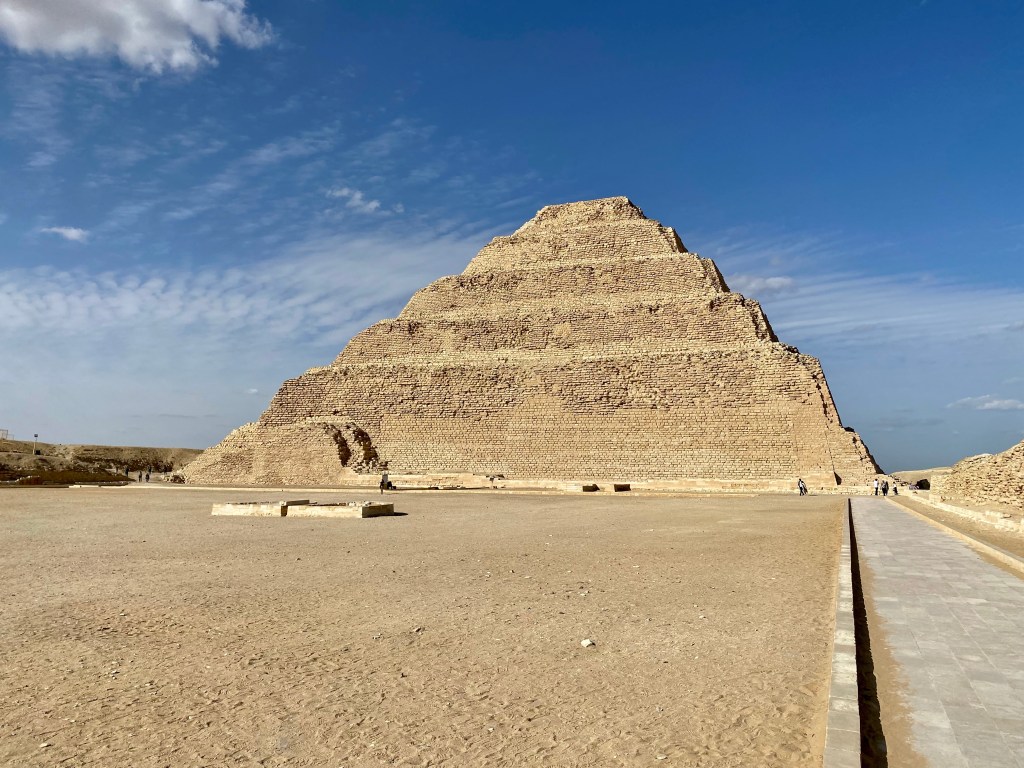
The next archeological site we visited was Saqqara. I now realize that I didn’t fully appreciate Saqqara while I was there – I absolutely plunged down a google rabbit hole a couple of days later and found out what a gold mine of archeological finds it was and currently is! As recently as January, tombs with literally hundreds of mummies and loads of antiquities were discovered! And just a few days ago it was announced that an intact papyrus scroll 16m long was retrieved from the site. 

Day 2 – Alexandria
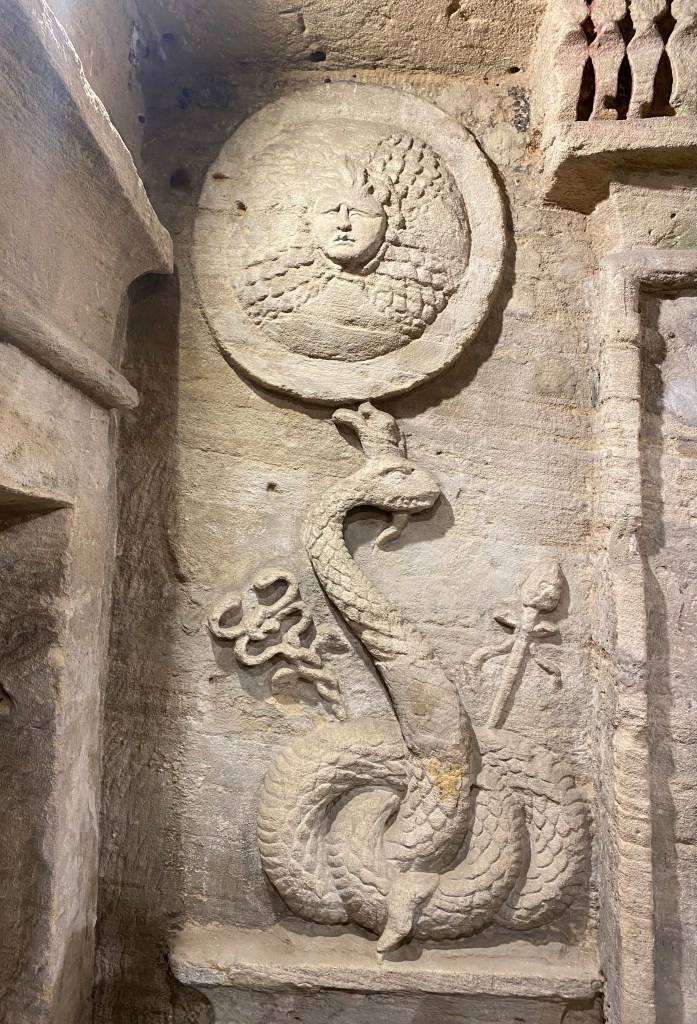
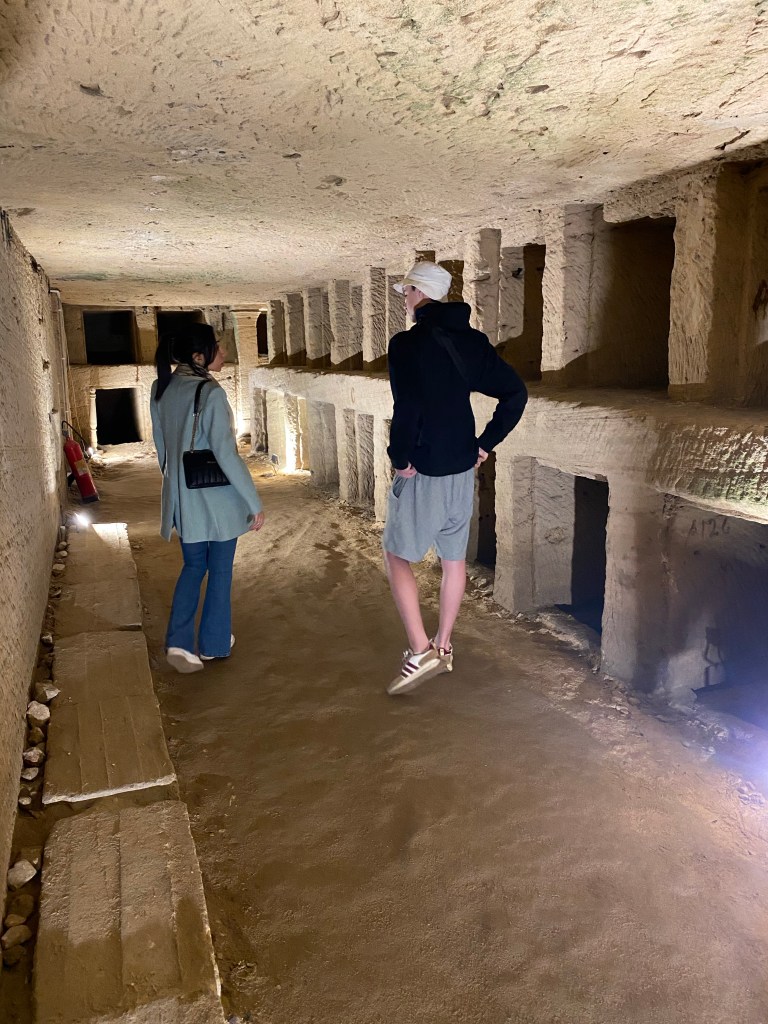
We headed north to the city of Alexandria to explore the sites there. It was an unusually rainy, windy and miserable day but we powered through, starting with the Catacombs of Kom el Shoqafa. In short, these are burial tombs originally created for one family in the 2nd century AD, but for unknown reasons, expanded to store numerous other bodies of both humans and animals.
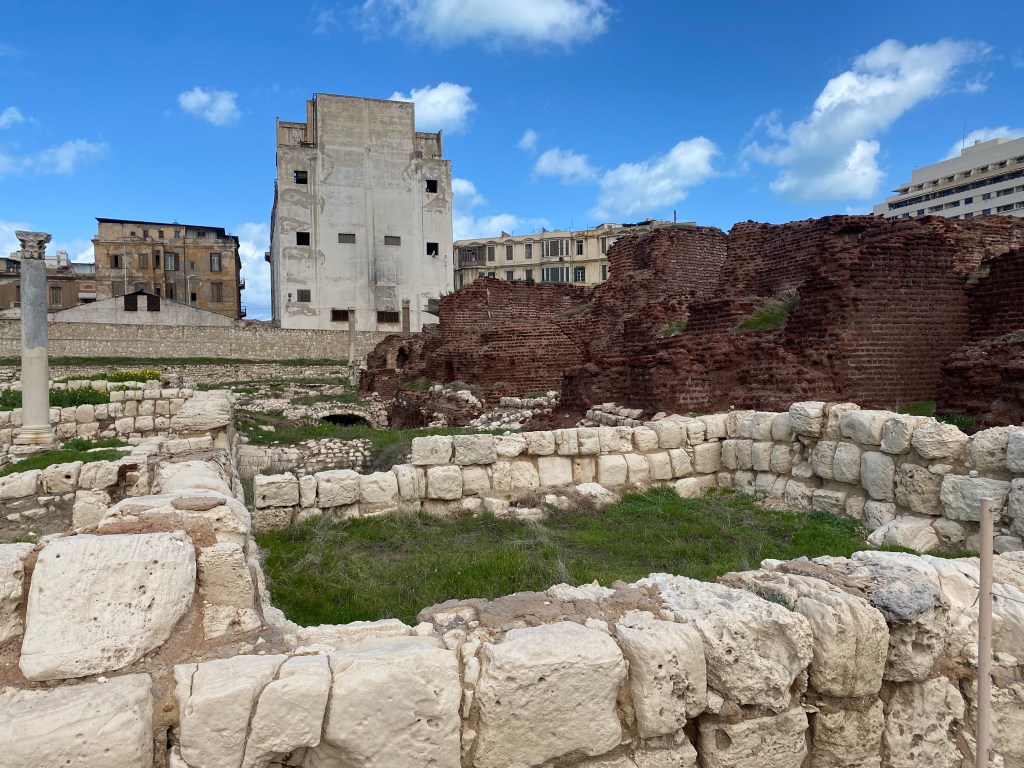
Our next stop was the Roman amphitheater and Roman baths.
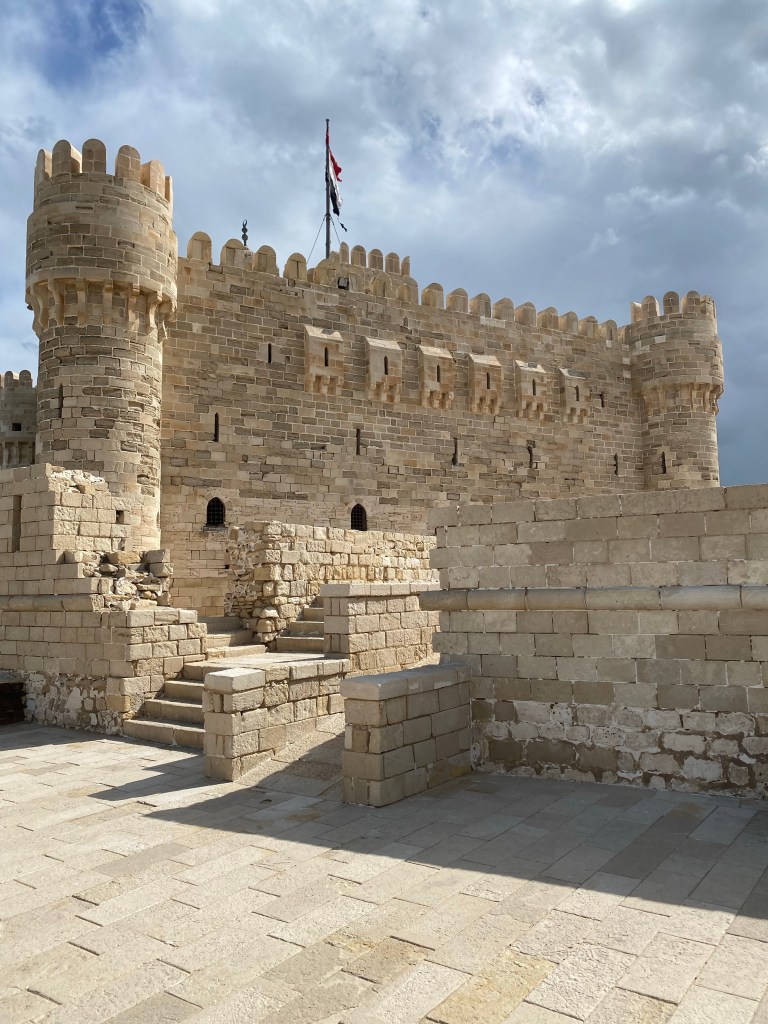
The Citadel of Qaitbay (fort built in the 15th century and restored in the 1980’s) was our next stop. Perched right on the Mediterranean Sea, it was a windy spot but afforded great views of the surrounding city and the sea.

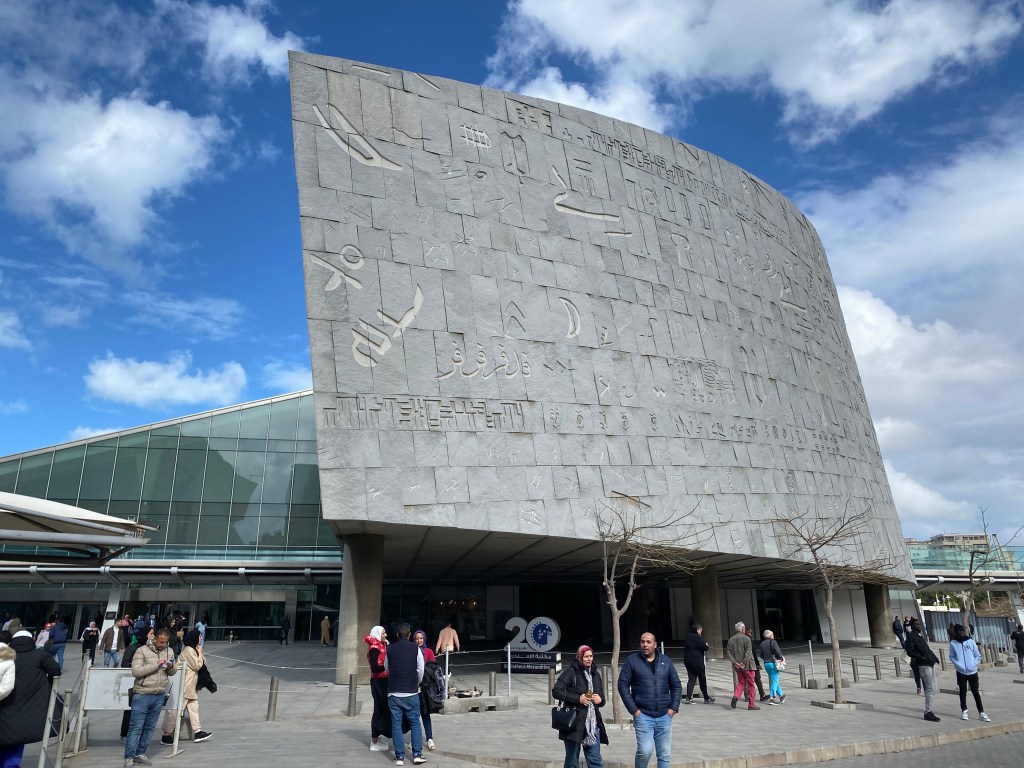
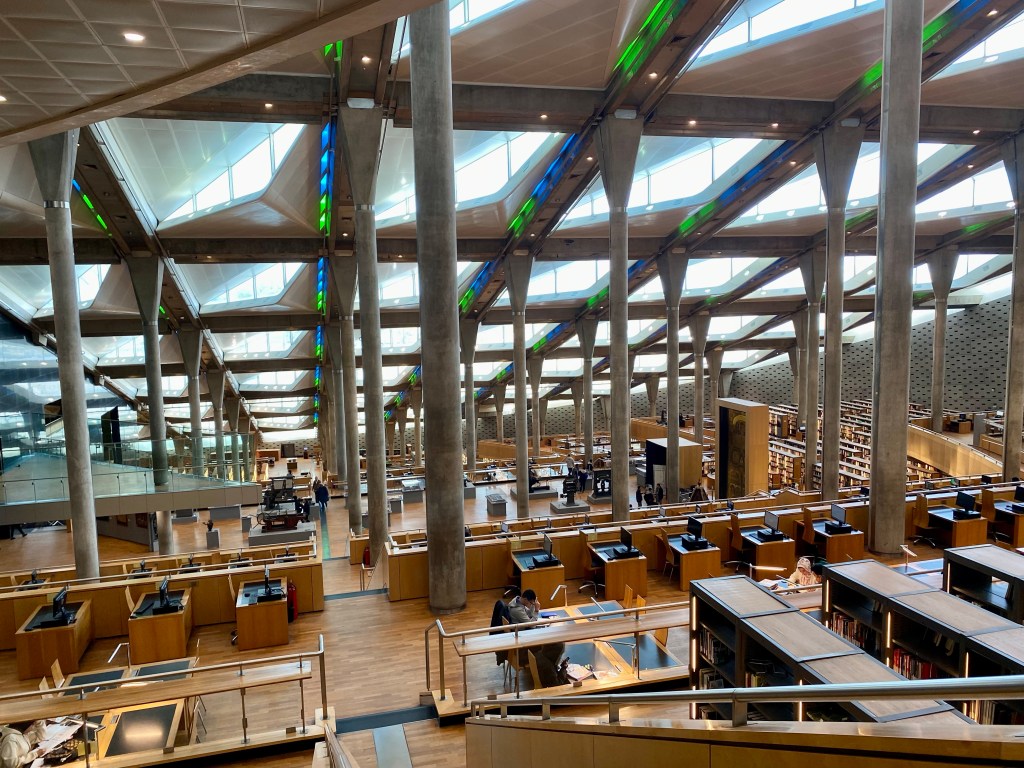
Probably the highlight of the day was the modern Bibliotheca Alexandrina. I could have spent hours here exploring the collection of books, art and antiquities! And the 11 story building itself is just stunning! It commemorates the Library of Alexandria, once the largest in the world. Unfortunately the original library’s collections were lost in a series of accidental and purposeful events disputed through history but likely completed in around 600-700 AD.

Disappointingly we concluded our day in Alexandria with lunch at a somewhat dingy tourist restaurant on the ocean. The servers were very nice and super attentive though and the fish was surprisingly good!
 My Motion Devotion
Very interesting. Love your blogs.
LikeLike